

In March 2011, Ocean released his project “nostalgia, Ultra.” Coming up with the name only five minutes before it was completed, Ocean coins this compilation as “nostalgic,” and “modern.” Ocean’s first mixtape, “nostalgia, ULTRA.” mainly focuses on relationships, his personal life, and his view on society. Noted by Rolling Stone magazine as a “gifted, avant R&B smoothie,” Def Jam has announced their plans to re-release “Nostalgia, Ultra” as an EP, set to debut on iTunes on May 31, 2011, with physical cpies being available on July 26, 2011. Often being compared to heavy-weight R&B/Rap champ Drake, Ocean states that Drake reached out to him with a little advice, complimenting him on the sound of his release.
Originally from New Orleans, LA, Ocean evacuated from the University of New Orleans and moved to Los Angeles, CA just as Hurricane Katrina hit in 2005. Once in Los Angles, Ocean joined OFWGKTA (Odd Future Wolf Gang Kill Them All), often simply called Odd Future, at the end of 2009. Since then, Ocean has written songs for popular artists such as Justin Bieber, Brandy Norwood, Beyonce Knowles, and John Legend.
Links:
Novacane, which is set to be Frank Ocean’s first single:
Frank Ocean Tumblr:
http://frankocean.tumblr.com/

Turn on your televisions. Flip through your favorite magazines. Browse the Spring/Summer 2011 fashion lines for many of your favorite designers and I'm sure you've seen it. It's been said that past trends do always reemerge and color blocking is simply a small truth to that myth. So, what exactly is color blocking, you say? Allow me to reacquaint you with this 1960s mod fashion look.
Mod, short for modernist, is a subculture that originated in England during the late 1950s and the early-to-mid 1960s. This was an era all about fashion, African American soul, British beat music, and Jamaican ska, highly associated with youth and all-night dancing at clubs. Fashion during this time was passionate amongst young adults who lived in metropolitan London or new towns located in the south. Mod females, such as Twiggy and Jean Shrimpton began to exemplify the look of this era, helping to spread awareness to a larger audience and create the color-blocking look.
What is color blocking?
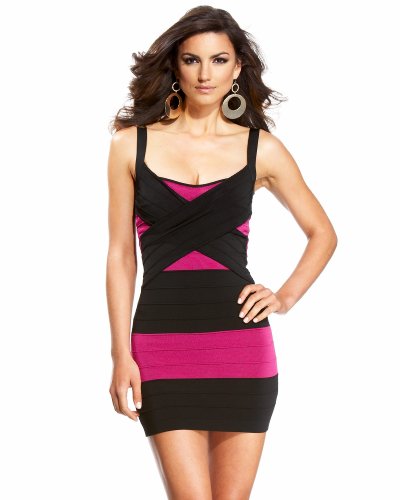
Color blocking is simply the combination of two or more color blocks in one ensemble. This could be applied to shoes, a handbag, a top, bottom, or a dress. The colors can be bright, contrasting, complimentary, or monotone. While the trend may seem carefree, you do want to be careful because it is easy to steer it in the wrong direction. Generally speaking, a color blocked outfit will look best if you work with your own body type. For pear shapes, darker colors on the bottom half work best, while avoiding colors around the stomach area work better for apple shapes. For hourglass shapes, a color block around the waist is a good way to accentuate your curves and figure.
Once you grasp the concept, don't be afraid to experiment. Any color combination can be pulled off if done properly, but do avoid using more than three or four colors. More colors will take away from your body shape and leave you looking like a Rubik's cube.
Many designers such as Prada, Stella McCartney, and even Gucci have devoted some of their line pieces to color blocking but if you're fashionable on a budget, many stores such as Forever21, Urban Outfitters, Asos, and H&M offer pieces to help you create this look.
For help with mastering this trend, I've included a color wheel for help combining different colors, celebrity shots, and photos from various Summer 2011 fashion lines that include color blocking.



Thanks for reading!
- Chrissy Dior


We’ve all seen her. The girl in the club with “Casper the Friendly Ghost” complexion and the brown sugar skin tone from the neck on down. Most would jump to the conclusion and say, “Girl, that’s just because she used the cheap stuff,” but sadly, that’s not always the case. Some women simply a.) don’t know / dont know how to match their skin tones or b.) don’t actually need foundation. With this being said, I’ve formulated a few tips to help YOU avoid being the ghost of the party.
First of all, you should make the decision of whether or not you need to invest in a great concealer or a foundation.
1.) Find out your skin type. Your skin type makes a big difference on what type of makeup will look best on your face. If you have oilier skin, a foundation may help even out your tone and neautralize the oils you have. If you are prone to acne or break-outs, a simple concealer may be able to cover up those troublesome spots and still leave you with an even tone. If you have usual dry skin, a clear, tinted moisturizer will work much better for you.
2.) What are you trying to achieve? If you’re only looking to cover a few minor blemishes, look for a concealer that matches your skin-tone. MAC, Fashion Fair, Clinique and other counters located in department stores are more than happy to assist you in finding the perfect tone for you, as well as some cosmetic stores, such as Sephora and Ulta. If you’re looking for ultimate coverage, foundation would do the trick. If you’ve never worn or aren’t experienced in wearing concealer or foundation, it is best to get the help of a professional so that it will look as natural and even as possible.
3.) Skin Prep. One major mistake a lot of women make is applying makeup to an unprepped, unclean face. If you have drier skin, a good exfoliant or moisturizer applied before your makeup will help take away the dead skin cells that leave your makeup looking uneven and patchy. There are also several primers on the market, such as Sephora’s Correcting, Smoothing Primer, which is designed to help prep your face and give it a more natural, soft glow.
4.) The Application. With any product, use sparingly to avoid creating a makeup line which results in a more “mask” type look. Small, even dabs will do the trick as opposed to large, uneven amounts all over the face. Be sure to blend well with a makeup brush or sponge and if possible, avoid using your hands unless they are clean in order to prevent the spreading of germs to your face.
Thanks for reading!
- Chrissy Dior


